Exploring the Benefits of Brushless DC Motors in Tailored Solutions
Understanding Brushless DC Motors
What are Brushless DC Motors?
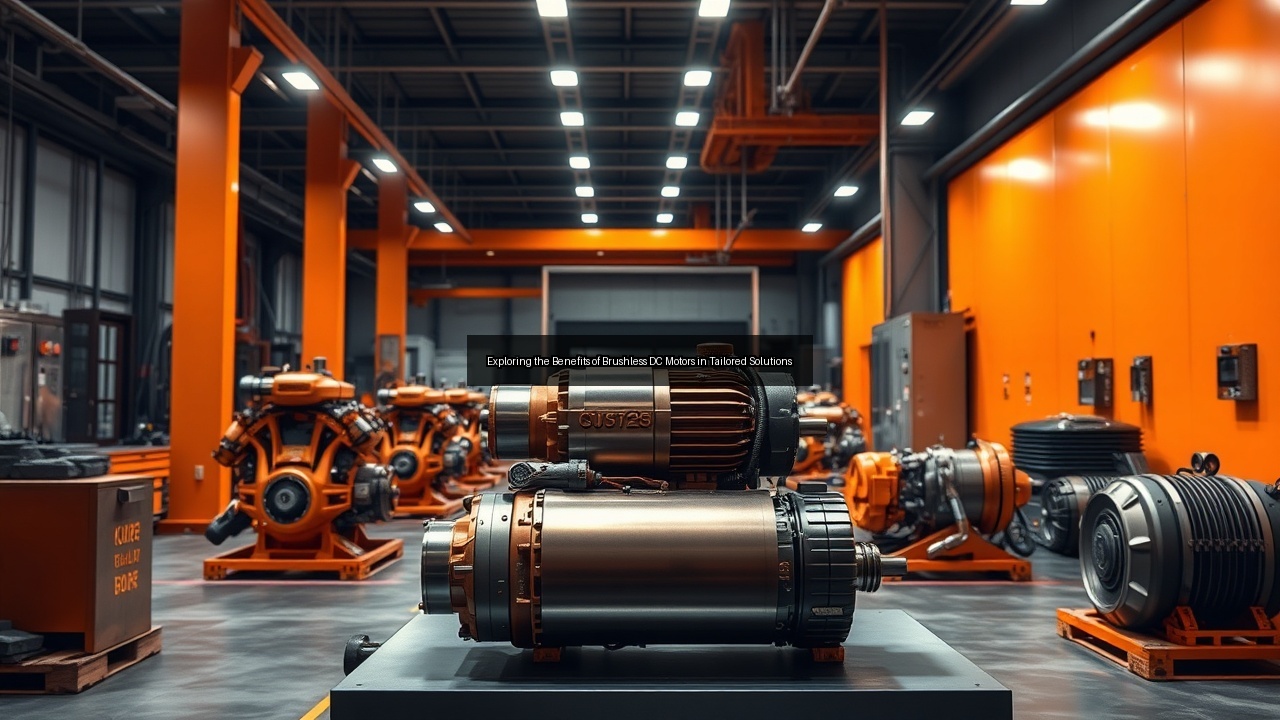
Brushless DC motors rely on electronic commutation instead of mechanical brushes to control the flow of direct current through the windings. Engineers design these motors with permanent magnets on the rotor and stationary coils on the stator, which eliminates friction losses and extends operational life. The controller senses rotor position and switches current at precise intervals to maintain smooth rotation. This architecture delivers higher torque density than older designs and supports variable speed operation without additional hardware. Manufacturers integrate sensors or sensorless algorithms to optimize timing across load changes. In practice, brushless dc units power everything from handheld tools to large industrial drives because they convert electrical energy efficiently into mechanical output. Companies select these motors when reliability and compact size matter most in demanding environments.
Differences Between Brushless DC Motors and Traditional DC Motors
Traditional dc motors use carbon brushes and a commutator to switch current, which creates wear, sparks, and electromagnetic interference. Brushless dc motors replace those parts with solid-state electronics that switch phases electronically. The absence of brushes removes a major maintenance item and allows higher speeds without mechanical limitations. Efficiency improves because brush contact losses disappear, often reaching 90 percent or more under typical loads. Traditional units generate more heat at the commutator, while brushless versions distribute heat evenly across the housing. Control flexibility increases with programmable drivers that adjust timing on the fly. Engineers prefer brushless dc motors in applications that require quiet operation and long intervals between service. Inventory teams also stock fewer replacement parts since the design contains no wearing contacts.
Applications of Brushless DC Motors in Various Industries
Automotive engineers install brushless dc motors in electric power steering and cooling fans because they deliver precise torque with minimal noise. Aerospace teams choose them for actuators and pumps where weight savings and reliability directly affect flight safety. Medical device makers rely on these motors inside infusion pumps and surgical tools that demand sterile, low-vibration performance. HVAC systems use them in variable-speed blowers to match airflow to demand and reduce energy costs. Robotics firms integrate brushless dc motors into joint drives to achieve fast response and accurate positioning. Food processing lines employ sealed versions that withstand washdown cycles without corroding. Across manufacturing plants, these motors replace older induction motors where energy savings and reduced downtime justify the upgrade. Each sector benefits from the motor’s ability to run continuously with little attention.
Advantages of Custom Motors
Enhanced Efficiency and Performance
Custom motors allow designers to match winding configurations, magnet grades, and rotor geometries to exact load profiles. This tailoring raises overall efficiency by several percentage points compared with off-the-shelf units. Performance improves when the motor’s torque-speed curve aligns with the application’s requirements, eliminating the need for oversized components. Gear reductions can be optimized or removed entirely when the motor produces the right output directly. Thermal modeling during design prevents overheating under peak loads, further boosting continuous power ratings. Operators notice lower current draw and cooler running temperatures after installation. In electric trucks, for example, custom brushless dc motors extend battery range by converting more stored energy into motion. Precision engineering ensures every specification contributes to measurable gains in output and responsiveness.
Reduced Maintenance Needs
Custom motors built around brushless dc technology remove the brushes that require periodic replacement in traditional designs. Sealed bearings and optimized lubrication intervals further cut service visits. Because electronic commutation produces no arcing, contacts and slip rings stay clean longer. Maintenance teams track fewer failure modes and keep less inventory on hand for spare parts. Predictive diagnostics embedded in the motor controller alert operators before performance drifts. In high-volume manufacturing environments, these reductions translate into higher uptime and lower labor costs. Custom housings can include built-in cooling channels that maintain safe temperatures without external fans that themselves need servicing. Over the equipment lifecycle, the cumulative savings from reduced maintenance often exceed the initial premium paid for tailored motors.
Tailored Solutions for Specific Applications
Custom motors address constraints that standard products cannot meet. Engineers adjust shaft diameters, mounting flanges, and connector types to fit existing assemblies without adapters. Voltage ratings and controller interfaces match the power architecture already in place. When an application involves both generators and induction motors, custom brushless dc units integrate through compatible drive electronics. Special coatings protect against chemicals or moisture unique to a site. Performance software tunes parameters such as acceleration ramps and holding torque to the exact process. Companies avoid compromise solutions that waste energy or add weight. The result is a motor that performs its intended function with maximum effectiveness from day one.
Integrating Brushless DC Motors into Tailored Solutions
Design Considerations in Precision Engineering
Precision engineering begins with detailed load analysis that defines torque, speed, and duty cycle requirements. Engineers model magnetic flux paths and thermal gradients to select materials that meet both performance and size limits. Shaft runout, bearing preload, and rotor balance receive equal attention to ensure vibration stays within tolerance. Custom motors often incorporate encoder mounts or resolver pockets directly into the end bells. Thermal interfaces with heat sinks or liquid cooling plates are machined to tight flatness specifications. Electromagnetic compatibility testing confirms that switching noise does not disturb nearby sensitive equipment. Every decision traces back to measurable outcomes in efficiency, noise, and lifespan. The process yields motors that install cleanly and perform consistently across production runs.
Customization Options for Electric Motors
Customization options span mechanical, electrical, and software domains. Shaft extensions can include keyways, splines, or integrated pinions for direct gear attachment. Winding schemes support series, parallel, or delta connections to match available voltage. Feedback devices range from simple hall sensors to high-resolution absolute encoders. Software parameters allow fine-tuning of current limits, speed profiles, and fault responses. Custom motors may combine features of synchronous motors and servo motor architectures within a single housing. Paint, sealing, and connector choices further differentiate units for specific environments. These choices let buyers replace multiple components with one optimized motor. The flexibility supports both new product development and retrofits of legacy equipment.
Compatibility with Existing Systems like Generators and Induction Motors
Compatibility starts with electrical interface matching. Custom brushless dc motors accept the same dc bus voltage used by existing generators or battery packs. Mechanical interfaces align with shafts already coupled to induction motors or alternating current drives. Mounting dimensions follow industry standards so replacement occurs without machining new brackets. Control signals integrate through fieldbus or analog inputs already present on the machine. When hybrid systems combine direct current and alternating current sections, custom motors operate alongside synchronous motors without interference. Engineers verify grounding schemes and cable routing to prevent circulating currents. The result is a drop-in upgrade path that preserves surrounding equipment while delivering brushless dc benefits. Plants avoid costly system overhauls when adopting tailored solutions.
Case Studies: Success Stories of Custom Brushless DC Motors
Custom Solutions for Electric Trucks
Fleet operators retrofitted electric trucks with custom brushless dc motors sized for the vehicle’s weight and route profile. The motors delivered peak torque at low speeds for grade climbing while maintaining efficiency at highway cruise. Integrated gear reduction inside the housing eliminated external transmissions and reduced driveline losses. Battery range increased by 12 percent compared with previous motor selections. Maintenance logs showed zero brush-related service events over 18 months of daily operation. The custom mounting flange matched the original transmission bell housing, allowing installation during routine downtime. Drivers reported smoother acceleration and regenerative braking that recovered more energy. The project demonstrated how tailored motors transform commercial vehicle performance without requiring a complete chassis redesign.
Innovative Applications in Robotics and Automation
Robotics integrators developed collaborative arms around custom motors that combined high torque density with low rotor inertia. Each joint used a brushless dc unit paired with a strain-wave gear sized for the exact payload. Position repeatability reached 0.02 degrees because the motor controller compensated for thermal drift in real time. Automation cells replaced servo motor stacks with single custom units that included built-in brakes and absolute encoders. Cycle times dropped because acceleration limits rose without exceeding thermal budgets. Safety certification proceeded faster since the motors produced no brush dust that could contaminate cleanrooms. Inventory simplified when one motor family covered multiple robot sizes through software scaling. The approach allowed rapid reconfiguration of production lines when product mixes changed.
Improvements in Manufacturing Processes with Customized Motors
A mid-size manufacturer replaced aging dc motors on conveyor drives with custom brushless dc versions. Energy consumption fell 18 percent because the new motors ran at variable speeds matched to production demand. Downtime from brush replacement disappeared, and spare motor inventory shrank from 12 units to three. Customized housings accepted the existing gear reducers without modification, preserving capital already invested. Process data showed tighter speed regulation that reduced product defects caused by slippage. The motors communicated directly with the plant’s PLC network, enabling predictive maintenance alerts based on vibration trends. Over two years the project paid for itself through electricity savings and avoided repairs. Similar upgrades spread to other lines because the first installation proved the value of precision-engineered custom motors in daily manufacturing operations.
See Also
- Harnessing the Potential of Induction Motors in Customized Machinery
- A Deep Dive into Synchronous Motors for Specialized Uses
- Innovative Manufacturing Techniques for Bespoke Motors
- Understanding the Role of Gear Systems in Custom Motor Design
- Unlocking the Power of Custom Motors for Your Unique Applications